Skip to content
Harleston Village Association

Rooted in Harleston · 2026 Street Tree Program

Eligible Tree Guide

The nine species the City’s Urban Forestry Division currently allows on Harleston Village streets — with photos of each tree grown up, so you can picture it outside your door.

HVA is partnering with the City of Charleston’s Urban Forestry Division to plant 15 new trees on Village streets in 2026. For every two trees bought by participating HVA members, HVA donates a third. The City plants each tree in the public planting strip and cares for it through a 20–30 year productive life.

The right tree for your spot depends on three things: overhead power lines, planting-strip width, and sun. Urban Forestry makes the final call on species and placement.

Under or near power lines

Choose a small-maturing tree, generally under about 25 ft, to avoid conflicts with lines and utility pruning.

Open sites with room to grow

A large shade tree gives the most canopy, cooling and stormwater benefit.

Narrow strips or tight lots

Favor a narrow or smaller-maturing species to avoid foundation and sidewalk conflicts.

How big they get

Mature height range for each species. New trees are planted at about 2″ trunk diameter and rarely more than 12 ft tall; these are the sizes they grow into. A two-story house is roughly 25 ft.

~25 ft · power lines
020 ft40 ft60 ft80 ft

OK under power linesCase-by-case near linesNeeds open space Upper end of the range

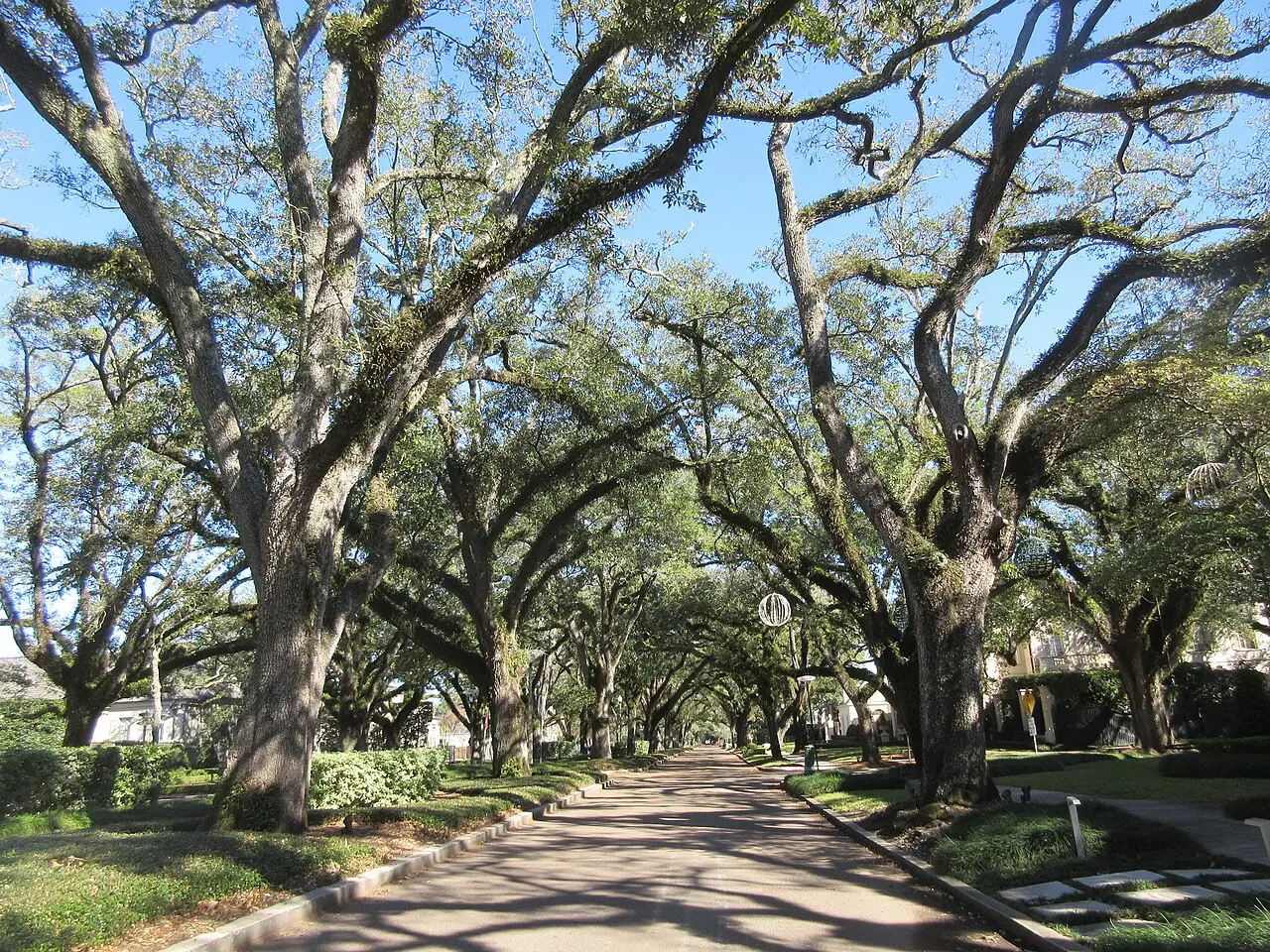
Mature live oaks arching over a residential street
Mature live oaks over a residential street in Metairie, Louisiana — what a street planting grows into.

Under power lines: No — open space only

Live Oak

Quercus virginiana

Mature size
40–80 ft tall
60–100 ft wide
Growth rate
Moderate

Iconic Lowcountry canopy tree; often grows wider than it is tall, so it needs ample room.
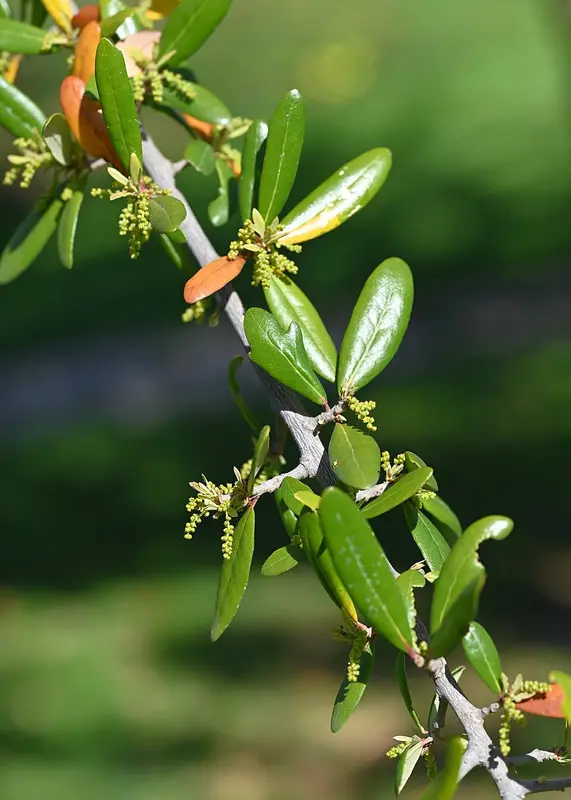
Live oak leaves and spring catkins
Evergreen leaves and spring catkins

Pros

  • Iconic Lowcountry canopy tree with strong neighborhood character
  • Long-lived (100+ years) once established
  • Excellent shade, cooling, and stormwater benefit
  • Deep root system and strong wind resistance

Cons

  • Needs open space — not suitable near power lines
  • Slow to reach full canopy spread
  • Large surface roots can affect nearby sidewalks over time
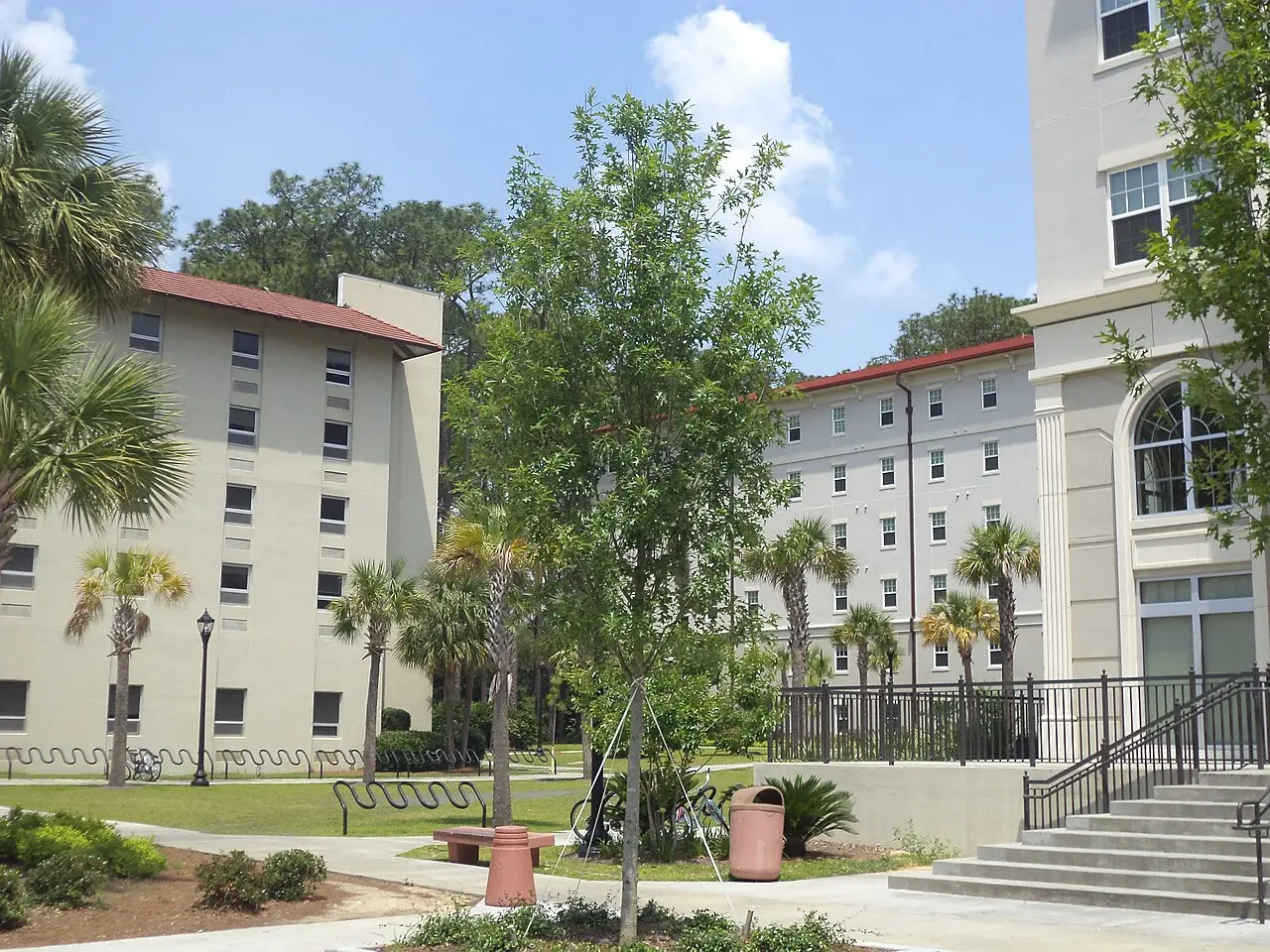
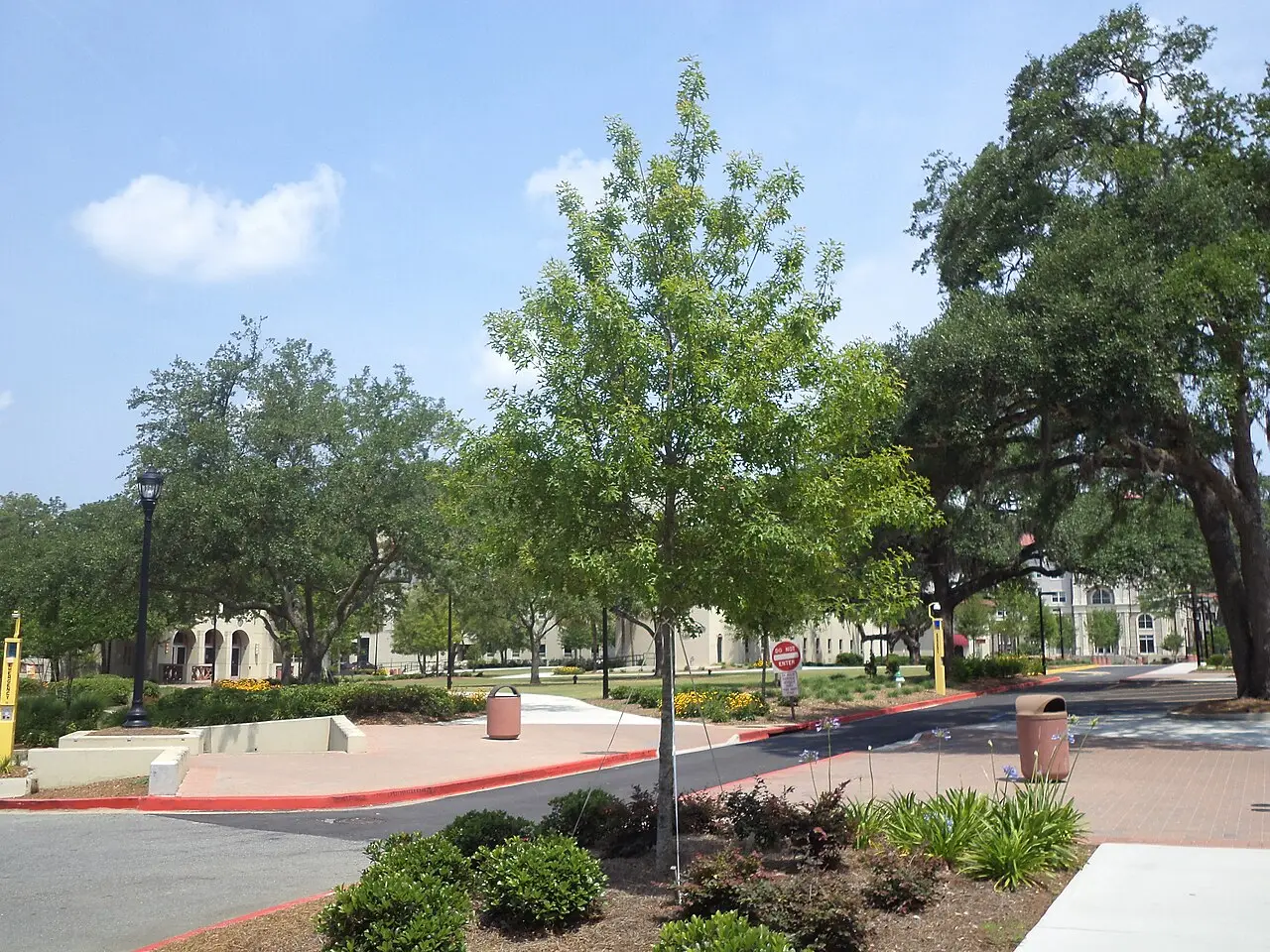
A young Shumard oak planted in a paved campus quad
A young ‘Panache’ Shumard oak planted in a paved quad in Valdosta, Georgia.

Under power lines: No — large tree

Shumard Oak

Quercus shumardii

Mature size
50–60 ft tall
40–50 ft wide
Growth rate
Moderate

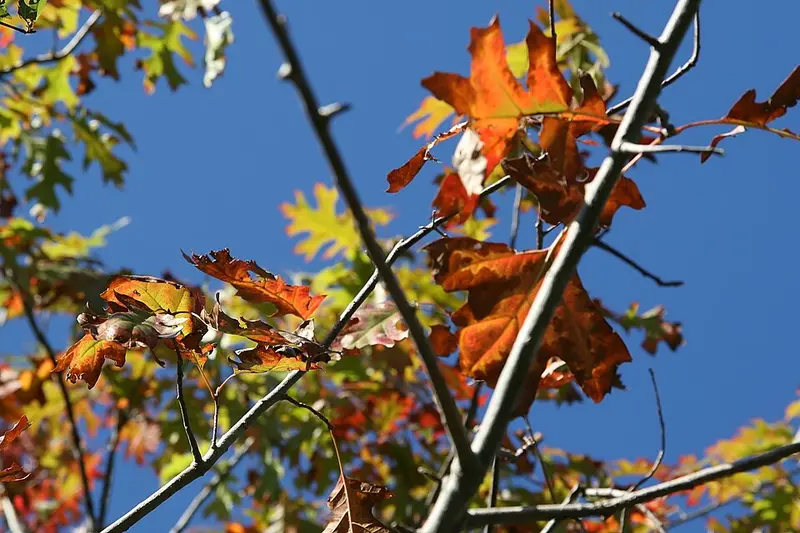
Native oak; strong fall color; high clearance once limbed up.

Shumard oak leaves turning red and orange in fall
Fall color

Pros

  • Native species with vibrant red-orange fall color
  • Grows relatively quickly for an oak
  • Tolerates urban soil compaction and heat well
  • High canopy clearance once limbed up, good for streets and sidewalks

Cons

  • Large mature size — needs a wide planting strip and open overhead space
  • Not suitable near power lines
  • Requires structural pruning when young to establish clearance
A young Nuttall oak beside a road and parking area
A young ‘Sangria’ Nuttall oak beside a campus drive in Valdosta, Georgia.

Under power lines: No — large tree

Nuttall Oak

Quercus texana

Mature size
40–60 ft tall
35–50 ft wide
Growth rate
Fast

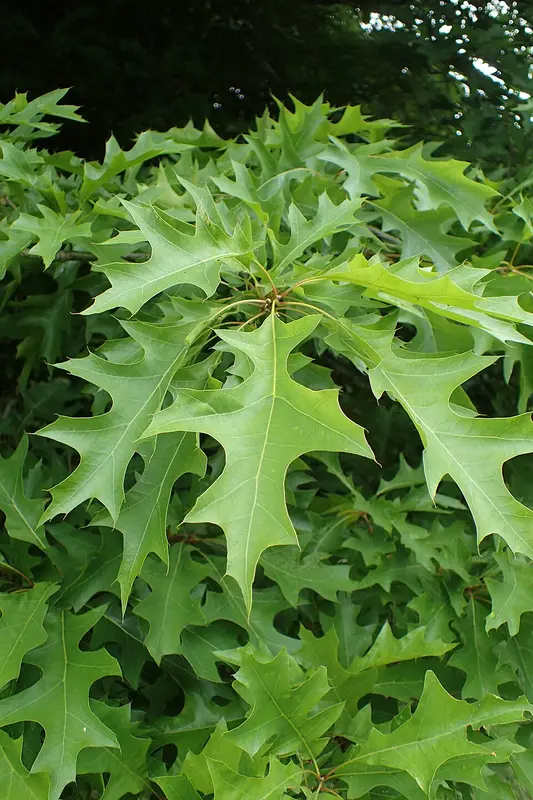
Native bottomland oak; tolerates wet soils; excellent street tree.

Deeply lobed Nuttall oak leaves
Deeply lobed summer leaves

Pros

  • Fast growth means quicker canopy establishment
  • Tolerates wet or poorly drained soils — useful for flood-prone sites
  • Excellent street tree reputation; native species

Cons

  • Large mature footprint — unsuitable under power lines or in narrow strips
  • Fast growth can mean weaker wood in early years
  • Needs regular structural pruning
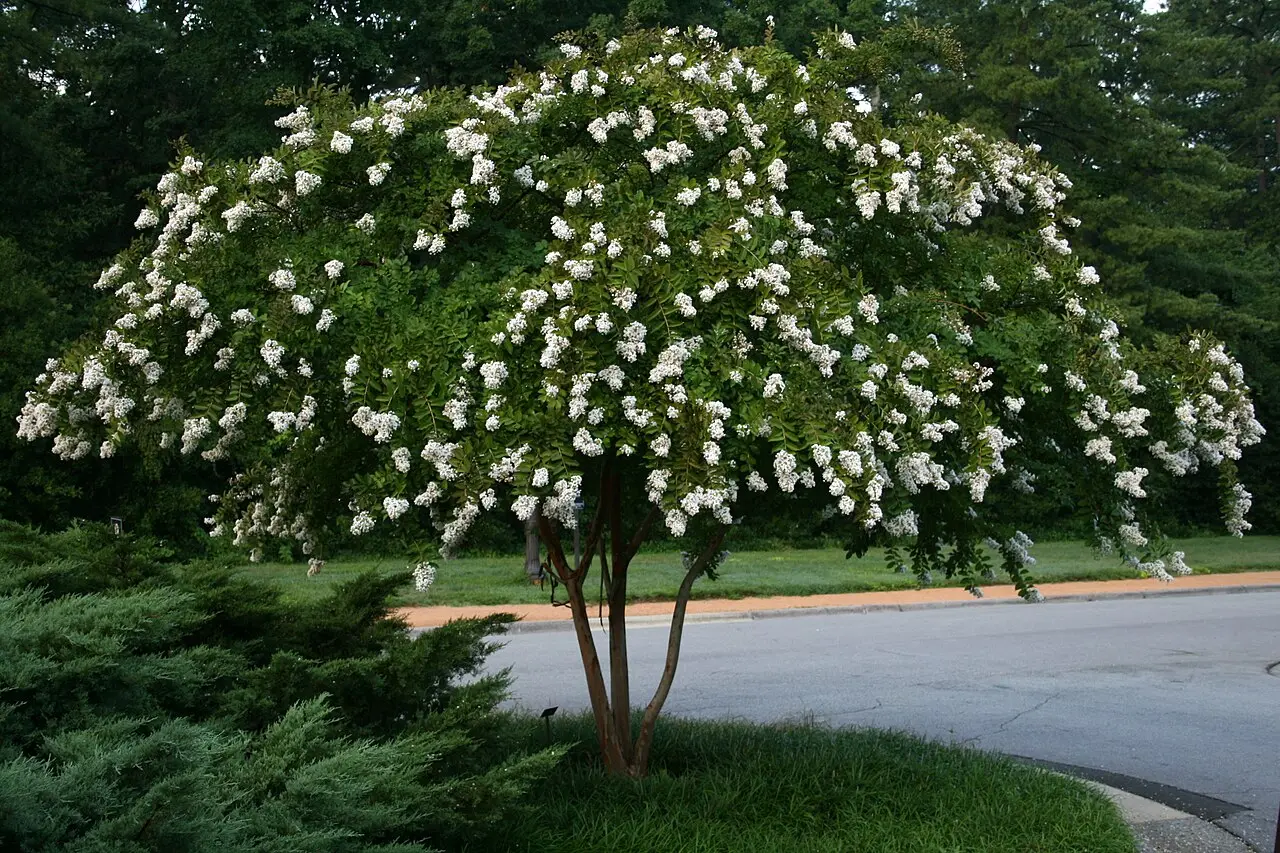
A multi-trunk crape myrtle covered in white summer blooms beside a road
A white-flowering crape myrtle in July bloom at Duke Gardens, North Carolina.

Under power lines: Case-by-case

Crape Myrtle

Lagerstroemia · Natchez, Tuskegee, Muskogee

Mature size
20–30 ft tall
15–25 ft wide
Growth rate
Moderate

Long summer bloom; showy bark; confirm cultivar height near lines.

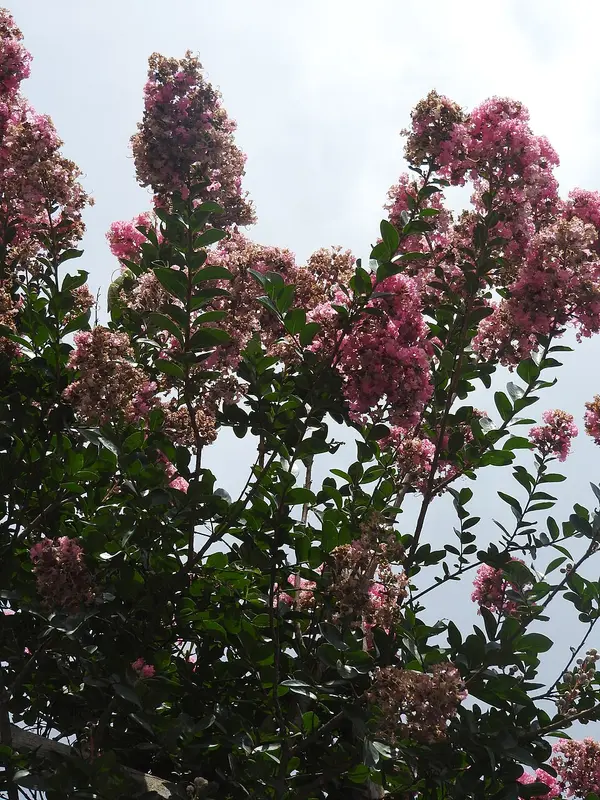
Pink crape myrtle flower clusters
Summer flower clusters

Pros

  • Long, showy summer bloom period
  • Attractive exfoliating bark for winter interest
  • Moderate size fits narrower planting strips
  • Multiple cultivars available to fine-tune mature height

Cons

  • Power-line suitability varies — confirm cultivar height case-by-case
  • Prone to “crape murder” if improperly topped or pruned
  • Some cultivars susceptible to powdery mildew
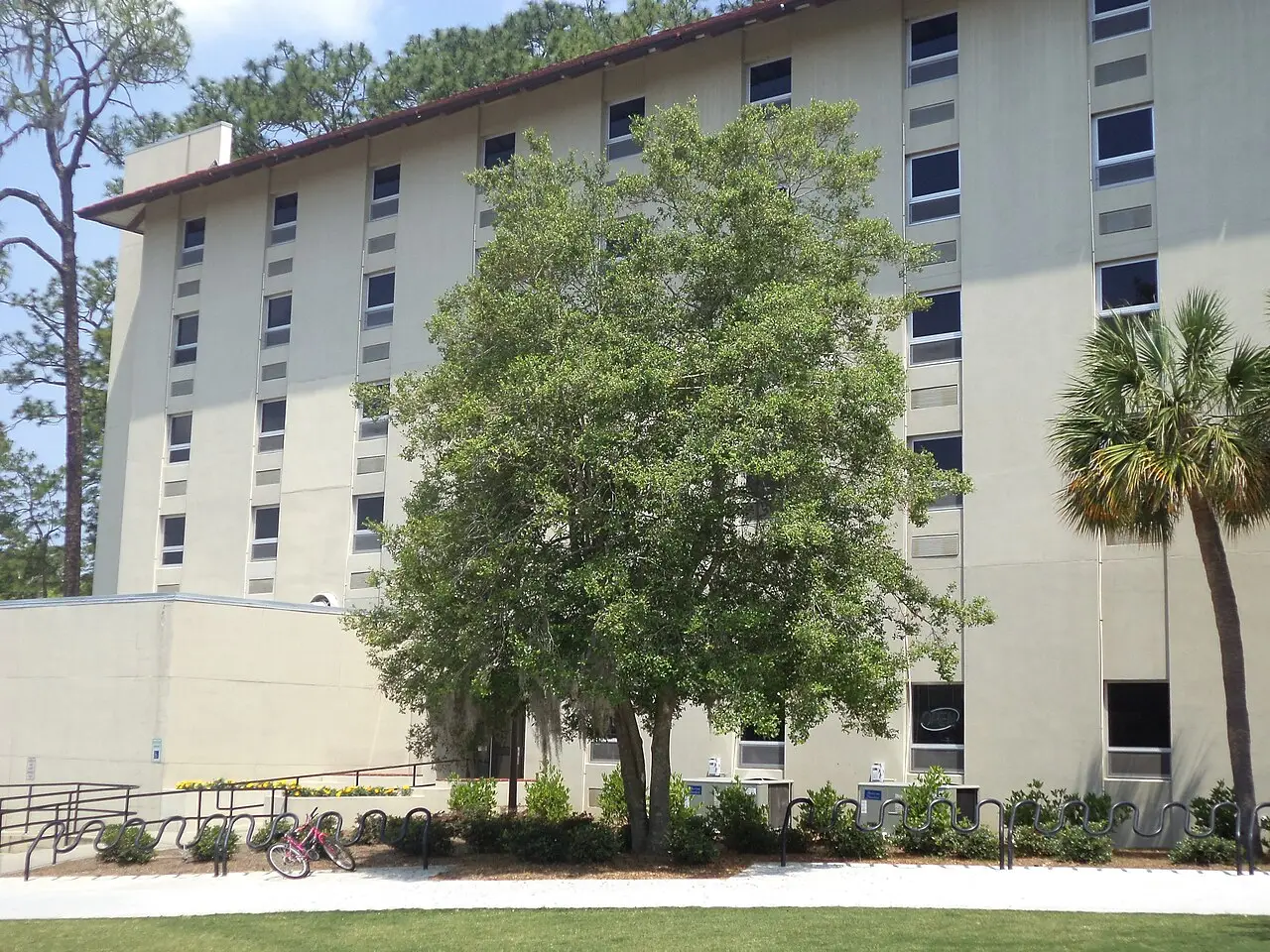
An East Palatka holly tree beside a multi-story building
An East Palatka holly, one of the eligible cultivars, in Valdosta, Georgia.

Under power lines: Case-by-case

Holly

Ilex · Dahoon, East Palatka, Eagleston

Mature size
20–30 ft tall
10–15 ft wide
Growth rate
Moderate

Evergreen; berries attract birds; low maintenance.

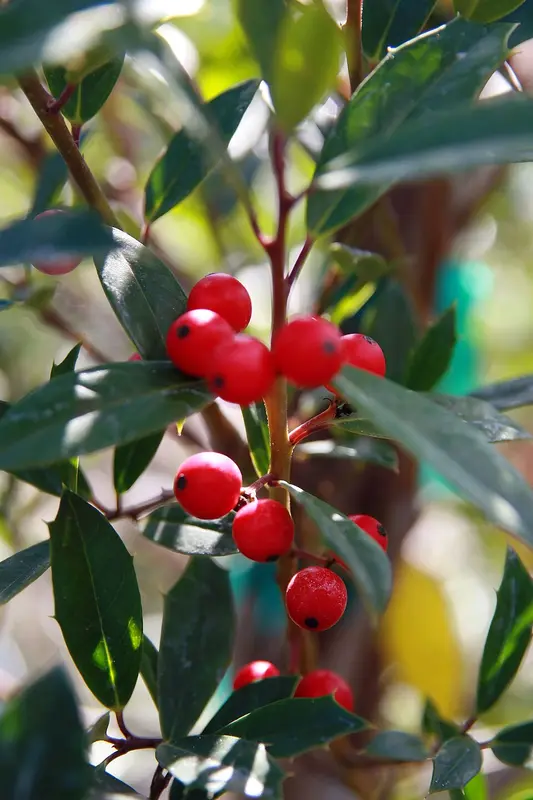
Red holly berries among glossy leaves
Winter berries (‘Foster’, East Palatka’s sister hybrid)

Pros

  • Evergreen — provides year-round screening and structure
  • Berries attract birds and add winter interest
  • Low maintenance once established
  • Narrower spread suits tighter sites

Cons

  • Power-line suitability is case-by-case — confirm cultivar height
  • Fallen berries can be messy on sidewalks
  • Slower to reach full form than faster-growing species
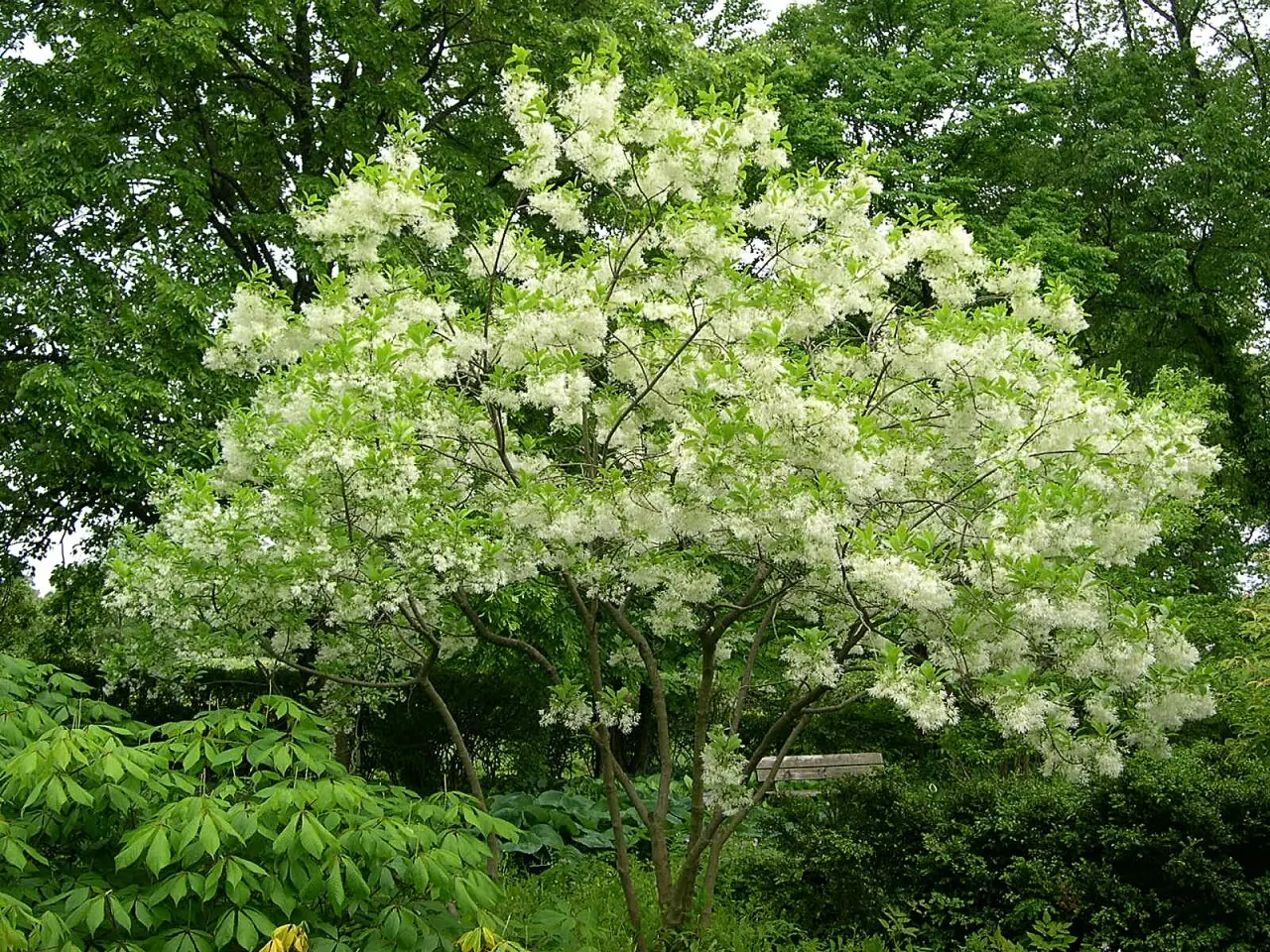
A rounded fringe tree covered in white blossoms
A fringe tree in full spring bloom at the Morton Arboretum.

Under power lines: Yes

Fringe Tree

Chionanthus virginicus · if available

Mature size
8–15 ft tall
6–10 ft wide
Growth rate
Slow

Native; showy spring bloom; limited nursery availability.

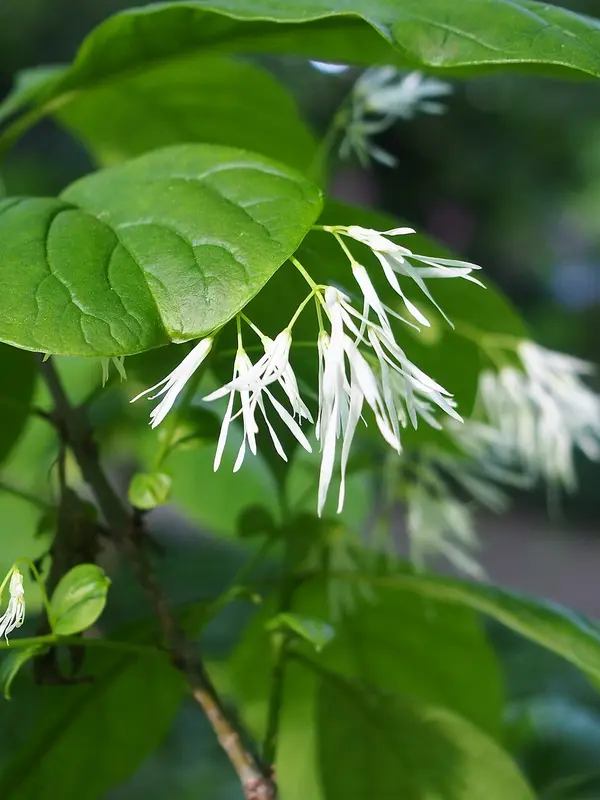
Fringe tree’s thin white petals hanging in clusters
The fringe-like spring flowers

Pros

  • Compact size is ideal under power lines and in narrow strips
  • Native species with showy, fragrant spring blooms
  • Low long-term maintenance given small mature size

Cons

  • Slow growth means a longer wait for canopy and shade
  • Limited nursery availability may delay sourcing
  • Minimal shade value given small mature size
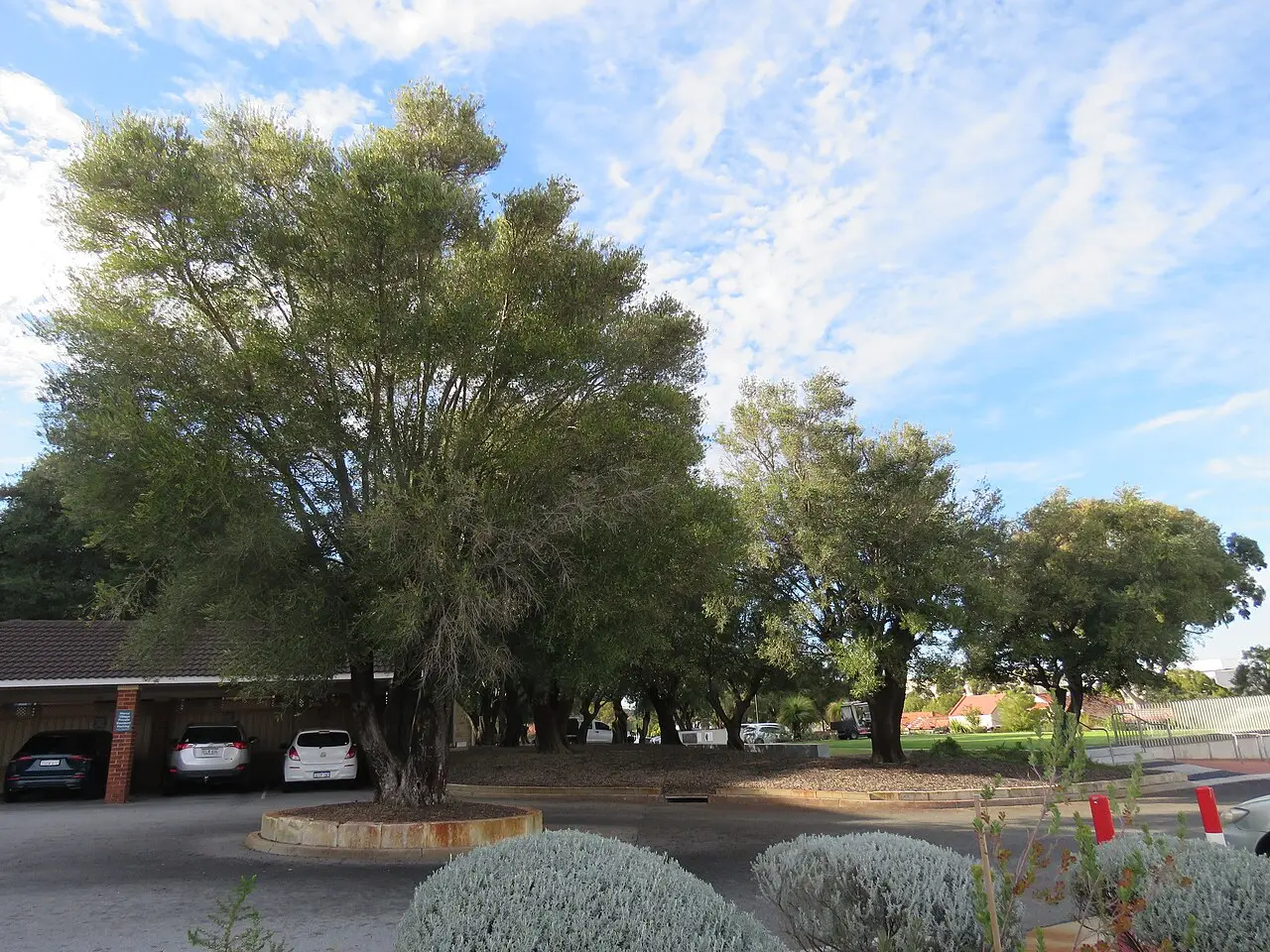
Olive trees planted along a street beside a parking lot
Olive trees planted along a city street.

Under power lines: No

European Olive

Olea europaea

Mature size
20–30 ft tall
20–30 ft wide
Growth rate
Slow–moderate

Drought-tolerant; needs well-drained soil; keep clear of lines.

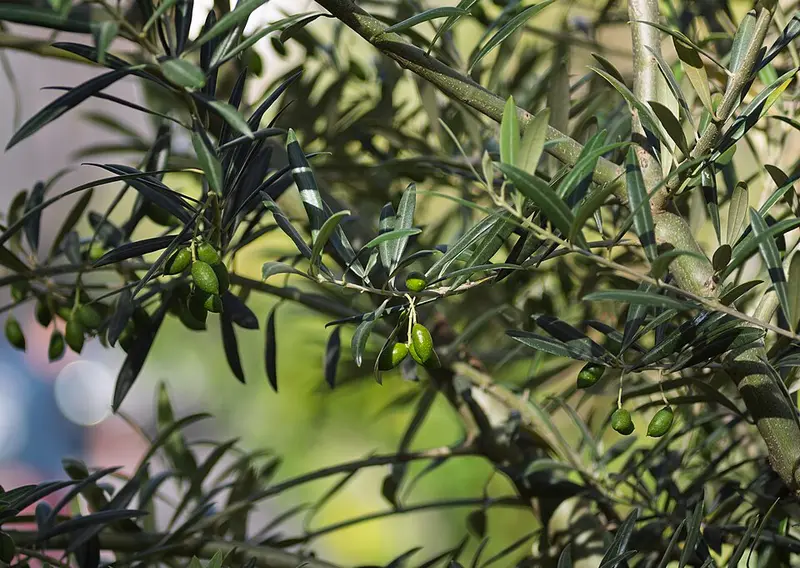
Olive branch with narrow silvery leaves and young olives
Silvery leaves and young olives

Pros

  • Highly drought-tolerant once established
  • Distinctive silvery foliage and Mediterranean character
  • Relatively low water needs after establishment

Cons

  • Needs well-drained soil — a concern in low-lying, flood-prone areas
  • Must be kept clear of power lines
  • Slow-to-moderate growth delays canopy benefits
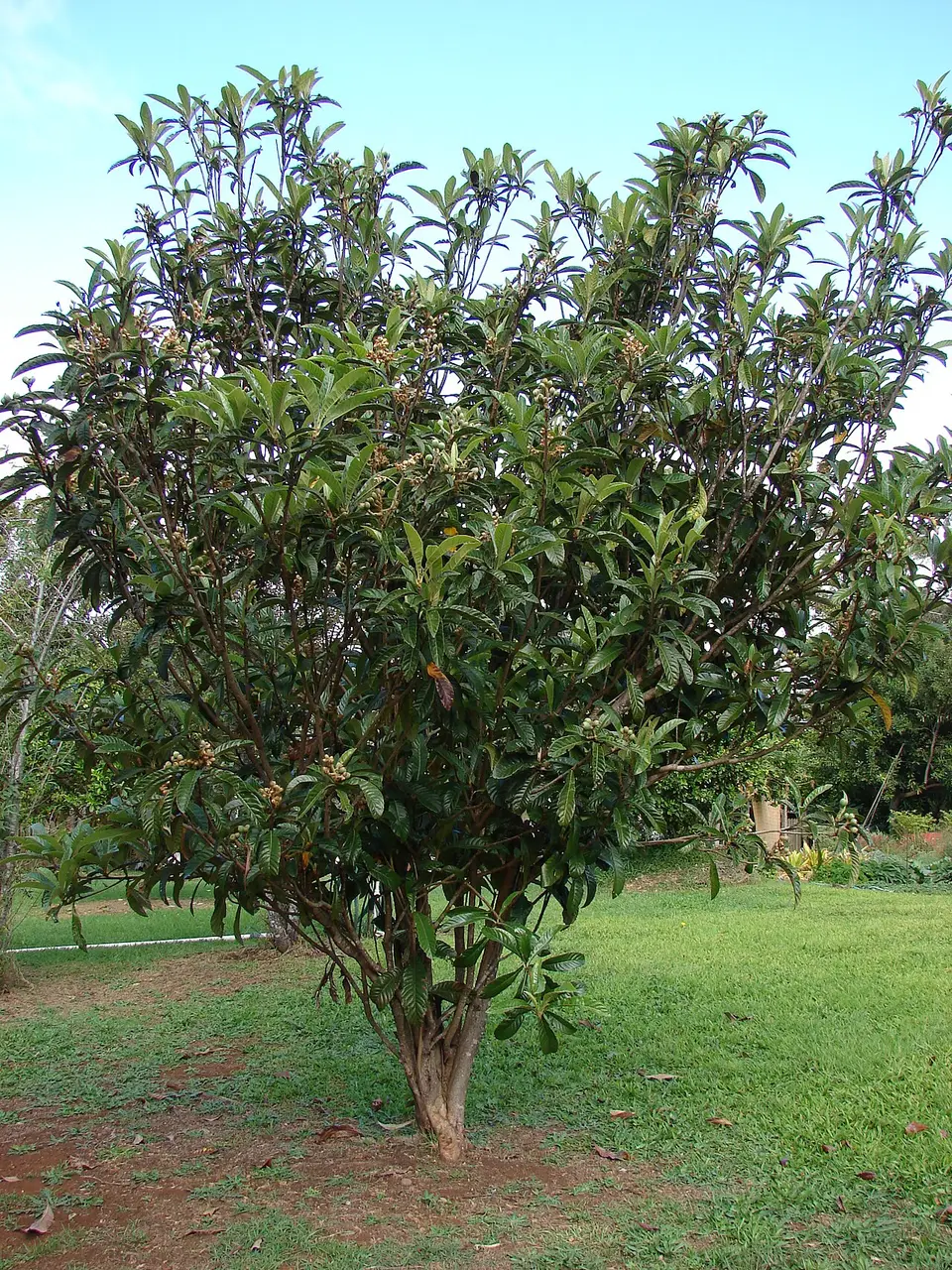
A dense, rounded evergreen loquat tree on a lawn
A mature loquat: dense, rounded and evergreen.

Under power lines: Yes

Loquat

Eriobotrya japonica

Mature size
15–25 ft tall
15–25 ft wide
Growth rate
Moderate

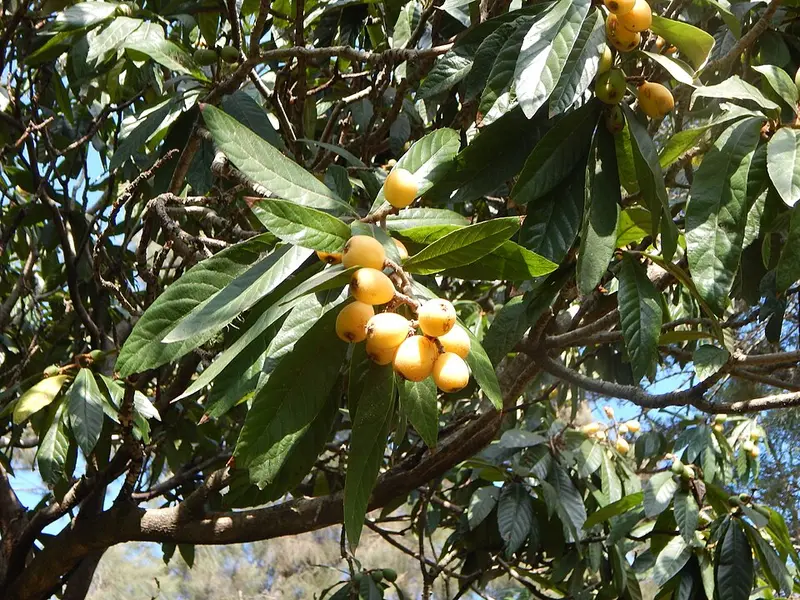
Evergreen; edible fruit; cold-sensitive in hard freezes.

Clusters of orange loquat fruit among large leaves
Spring fruit

Pros

  • Compact enough for use under power lines
  • Evergreen — year-round coverage
  • Produces edible fruit, a neighborhood amenity

Cons

  • Cold-sensitive — vulnerable to damage in hard freezes
  • Fallen fruit can create sidewalk mess and attract pests
  • Not a significant shade producer
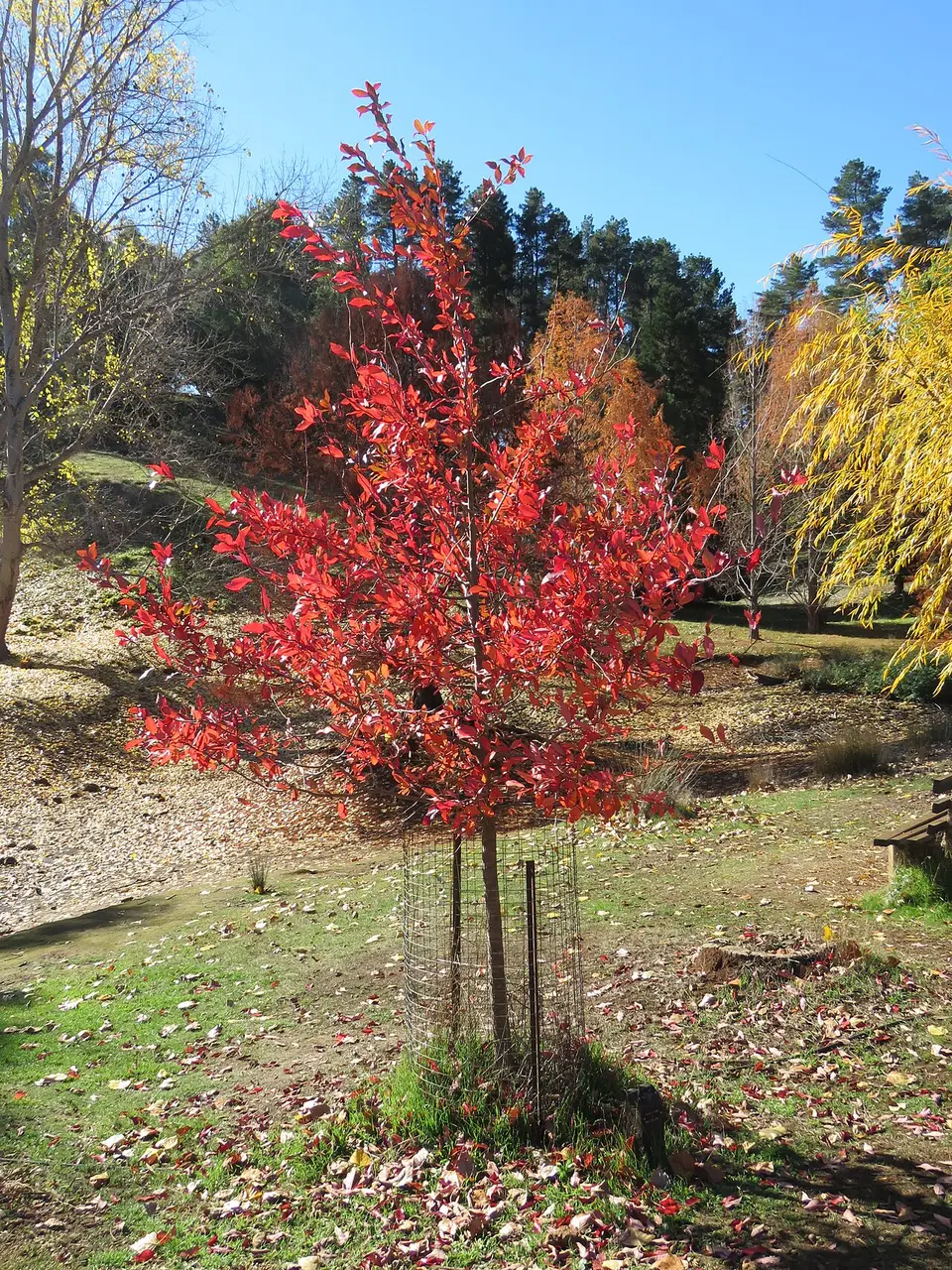
A young blackgum tree in full red fall color
A blackgum about five years after planting, in full fall color.

Under power lines: No — large tree

Blackgum

Nyssa sylvatica

Mature size
30–50 ft tall
20–30 ft wide
Growth rate
Slow–moderate

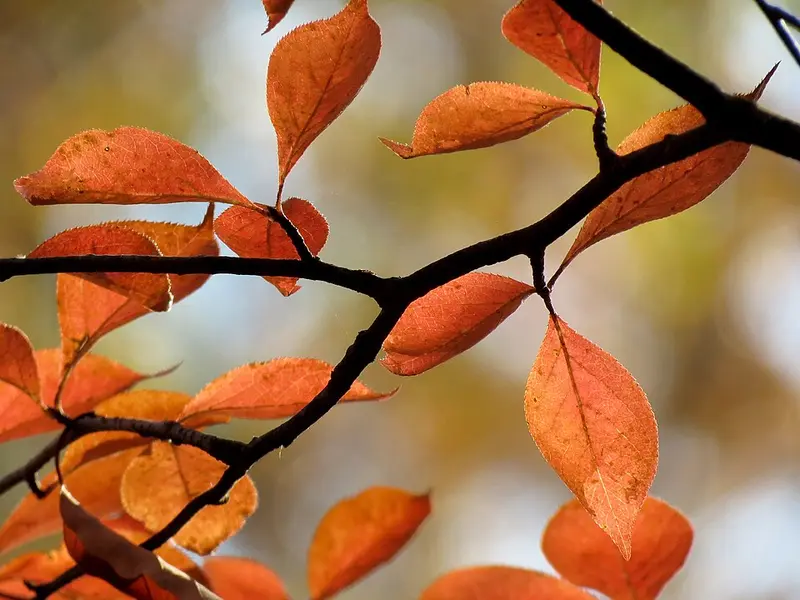
Native; brilliant red fall color; excellent wildlife tree.

Orange-red blackgum leaves on a branch
Fall leaves

Pros

  • Native species with outstanding brilliant red fall color
  • Excellent wildlife tree — fruit is a food source for birds
  • Strong, long-lived structure once mature

Cons

  • Large mature size unsuitable under power lines or narrow strips
  • Slow-to-moderate growth means a longer establishment period
  • Needs ample open space

Ready to pick a tree?

Every request needs photos of the planting site and is reviewed by your Area Steward before it goes to Urban Forestry. Plantings take place December through February. $295 per tree, paid to the City around planting time; HVA gives one free tree for every two its members plant.

Apply online

Resources

  • Urban Forestry Division · 823 Meeting St, Charleston, SC 29403 · (843) 724-7321
  • City Street Tree Program
  • Street Tree Manual — full species list and standards
  • Harleston Village Association — your Area Steward or the Livability Committee chair

Reflects the City of Charleston Street Tree Program and Manual as of 2026. Confirm current fee, species and site requirements with Urban Forestry before finalizing a request.

Photo credits

Photos from Wikimedia Commons, used under the licences shown. Photos may be cropped.